
What it means to live aligned with the Earth
7 Powerful Lessons from Tribal and Indigenous Peoples

Somewhere along the way, amid the noise and haste of modern living, many of us stopped listening.
But that connection isn’t lost — only dormant.
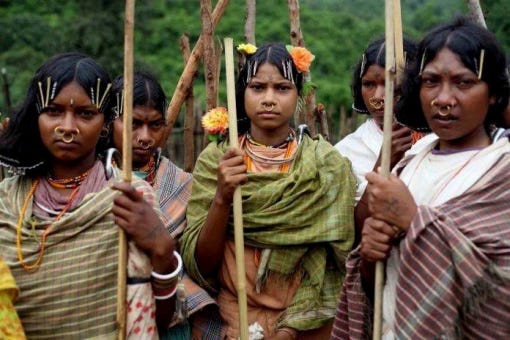
We often talk about ‘going back to nature’ as if it’s something we once had and then lost. But for millions of indigenous and tribal people around the world, that separation never happened. They have kept the connection alive — not as a lifestyle choice or a weekend retreat, but as a way of being.
India is home to over 700 tribal or Adivasi communities, each shaped by a distinct relationship with land and forest. In the Nilgiri Hills, the highlands of Odisha, the forests of Kerala, and the tiger country of Madhya Pradesh, these communities have lived in deep, continuous connection with their environments for generations.
Their traditions aren’t just cultural — they’re ecological. They show us how to live with the earth, not on top of it, and certainly not against it. And in this moment of climate crisis and spiritual disconnection, their wisdom feels more urgent than ever.
Here are seven powerful lessons India’s tribal peoples can teach us about reconnecting with the natural world. . .
1. The forest is a living presence, not a resource
For many Indigenous cultures, nature is not “out there”. It’s not a backdrop or a commodity—it’s kin.
Lakota people refer to the Earth as Uncí Makȟá ("Grandmother Earth"). Australian Aboriginal cultures speak of “Country” as a living, sentient presence with whom one maintains a relationship. Amazonian tribes often have no word for “nature” because there is no conceptual separation between humans and the environment.
For many Adivasi groups, the forest isn’t just where they live—it is life. The Kadar speak of the forest as a provider, protector, and teacher. The Saora believe spirits dwell in groves and hills. The Dongria Kondh revere the Niamgiri Hills as both deity and mother. And the Baiga refuse to plough fearing it would wound the body of Mother Earth.
Nature is sacred— not in the abstract, but in the everyday. When forest rights are stripped away, it isn’t just land that’s lost—it’s kinship.
Try this:
Next time you’re in nature, address it with respect. Greet the land like a relative. Not “it” but “you”.
Ask:
What would it mean to live as if this place were sacred?
2. Take only what you need—and give back
From the Potawatomi of North America to the Irula honey collectors of Tamil Nadu, traditional communities live by the principle of reciprocity. You don’t just take from nature—you ask, you thank, and you leave enough behind.
Indigenous communities live by reciprocity. You don’t just take from the earth; you offer something in return. That might be a song, a prayer, a gesture of gratitude—or simply restraint.
Robin Wall Kimmerer, a Potawatomi botanist, calls this the honourable harvest. It begins with asking permission and ends with sharing the gift.
The Irula harvest wild honey by smoking bees gently, never destroying hives, and always leaving enough for regeneration. The Baiga gather firewood from what the forest gives, not what they can cut.
Try this:
Before harvesting, picking, or even shopping, pause.
Ask:
Do I really need this? Then say thank you. Gratitude is a form of giving back.
3. Attention is a form of love
Indigenous knowledge is built not through data but through deep, patient observation. The Kadar of Kerala know whether langur monkeys or macaques have passed through by the patterns of shredded leaves they leave. Irulas can read obscure little signs on the ground that mean a snake is around. The Inuit read the thickness of sea ice by sound. And the San of southern Africa can read an entire story in a footprint.
This knowledge is passed by practice. In South India Muthuvan children learn to track bees, spot edible tubers, and read the ground. By 10 they can identify dozens of plants with medicinal or ritual use.
This attention isn’t scientific. It’s relational. And it’s rooted in love and belonging.
Try this:
Pick one small patch of land—a tree, a corner of a garden, a field—and visit it every day for a week. See what changes.
Ask:
What do I notice now that I didn’t before? What is this place trying to tell me?
4. Stories Carry Ecological Wisdom
All over the world, indigenous stories teach ecological truths.
In Australia, Dreamtime stories map waterholes, fire paths, and animal migrations—oral cartographies passed from generation to generation. They tell you where to go in drought, how to move with the land, not against it.
In India, Adivasi myths are full of forest spirits, sacred groves, and taboos that act as ecological protections.
Among the Warli of Maharashtra, the forest goddess Hirva Devi protects wildlife, and her wrath is said to bring illness or failed harvests if the forest is overused. In the Eastern Ghats, the Konds tell stories of Bhoota spirits who guard mountain springs—disturbing them brings drought. The Kadars have a series of myths which explain the sacred contracts they have made with Kadavul, the god of the forest, and the plants and creatures who live there.
These aren’t superstitions—they’re guides to keeping nature’s balance.
Try this:
Walk as if the land holds your story. Think of a childhood memory of being in nature. Tell someone about it. Pass it on. That’s how stories grow.
Ask:
What stories can I tell about local trees, hills, and rivers? What stories can they tell me?
5. Land is belonging, not ownership
For many tribal and Indigenous communities, the land isn’t something you own—it’s something you belong to.
Among Native American nations, the land is a relative, not a possession. The Lakota speak of Mitákuye Oyás’iŋ—“all my relations”—a worldview in which people, trees, rivers, and animals are kin. To fence off land, to buy and sell it, is to break that kinship.
In Australia, Aboriginal people see themselves as custodians of the land, not owners. Each person has responsibilities to their ancestral Country—its animals, stories, and sacred sites. Land isn't just a place. It's the law. It's a story. It's a self.
In India, land rights movements like those led by the Dongria Kondh and Bhils are not just about territory. They’re about identity and belonging. When the forest is taken, a way of being is erased.
We talk about roots, but we rarely ask what we’re rooted in.
Even where displacement has occurred, memory remains. Songs remember vanished rivers. Stories keep ancestral lands alive. Resistance often begins with a simple statement: We belong here.
Try this:
Think of a place that shaped you. A childhood garden, a patch of woodland, a stream, a hill you once climbed. That’s your place of belonging. Honour it.
Ask:
What does it mean to belong here? What would it mean to live like I belong—not to a country, but to a patch of earth?
6. Rituals root us to the seasons
Indigenous rituals mark the turning points of the year—the rains, the harvest, the flowering of trees. The Santals celebrate cattle and earth in Sohrai. The Gonds hold Madai festivals in honour of forest spirits. In these rituals, people don’t worship nature from afar—they participate in its cycles.
These are not quaint traditions—they’re ecological calendars. But mark the season—not just the date.
Try this:
Mark a seasonal change. Observe the phases of the moon and its tides. Follow the Celtic eight fold year. Light a candle when it rains. Make offerings to a tree. Leave water for the birds. Let ritual bring you back to the rhythm of nature.
Ask:
What small rituals help me feel part of the natural world? What rhythms have I forgotten? What could I remember if I slowed down and listened?
7. Simplicity is a form of wisdom
To live simply is not to live without—it’s to live within limits. Many tribal homes in India are made of mud, bamboo, and thatch—fully compostable, climate-resilient, beautiful. Traditional food is seasonal, low-waste, and rich in diversity. Water is carried from a stream. Tools are passed down from generation to generation.
These are not signs of poverty. They’re signs of balance. The lifestyle isn’t poor. It’s in equilibrium.
Try this:
Choose one act of simplicity this week. Use what you already have. Cook something from your graden or gathered locally. Walk instead of drive. Switch off your gadgets and appliances. Let it feel nourishing, not austere.
Ask:
What is enough for me? What do I truly need—and what can I let go of?
A Final Word
We don’t need to romanticise Indigenous life. Tribal communities face displacement, hardship, and injustice—often at the hands of those who claim to “develop” them.
But we can recognise their wisdom. And we can learn. Because if there’s one thing Indigenous knowledge teaches us—from the Nilgiris to the Andes to the Arctic—it’s this:
We are not separate from the Earth.
We are part of it.
And the path home is still there, under our feet.
We just have to listen.